 Bio-based antimicrobials
Bio-based quaternary ammonium antimicrobials, DIN EN 1276 compliant including under dirty and protein-rich conditions. Active against Gram-positive and Gram-negative bacteria, including clinically relevant ESKAPE and MDR pathogens.
More potent. Safer. Bio-based.
At low active concentration (MIC90)
MIC90 as low as 1.6 mg/L (S. aureus) and 6.4 mg/L (E. coli)
bacterial kill rate achieved in formulated product testing
active against Gram-positive and Gram-negative bacteria, including clinically relevant ESKAPE / MDR pathogens
validated against 9 clinically relevant bacterial species, including ESKAPE pathogens
compliant, including under dirty / protein-rich conditions
no observed resistance build-up
efficacy testing in collaboration with the Institute of Molecular Biosciences, University of Graz
route to market via the EU Biocidal Products Regulation (BPR)
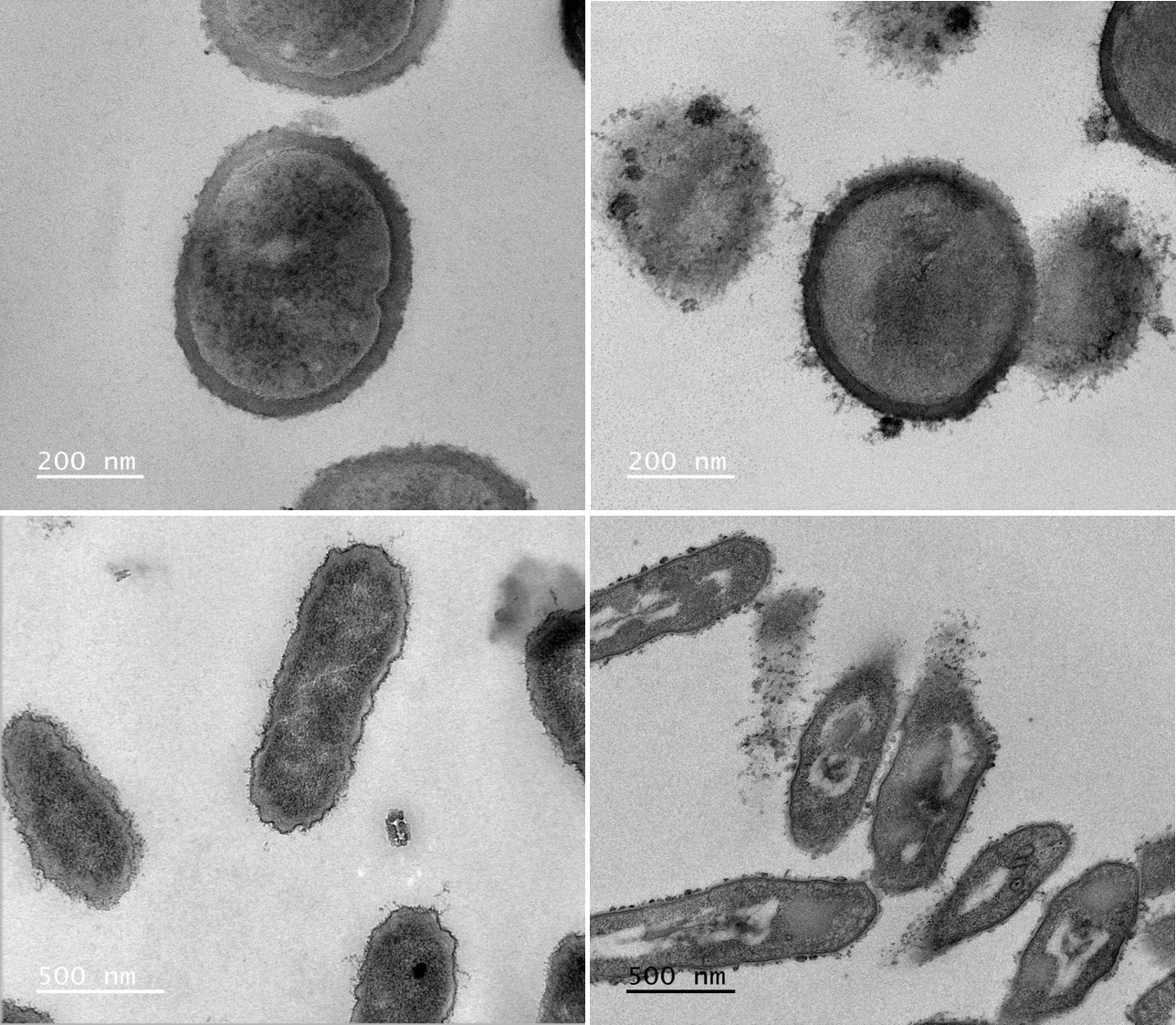
Action on micro-organisms.
TEM micrographs before (left) and after (right) exposure to SYLVAXIS: visible cell-wall disruption and lysis across Gram-positive (top) and Gram-negative (bottom) bacteria at low active concentrations.
Scale bars: 200 nm / 500 nm
Antimicrobial resistance was associated with around 4.95 million deaths globally in 2019.
SYLVAXIS offers a bio-based, high-performance alternative to fossil-based quats, with no observed resistance development.
Source: Murray et al., The Lancet, 2022 (GBD AMR Collaborators).